From 1 April 2026, the UK government is introducing further increases to the National Living Wage (NLW) and National Minimum Wage (NMW). These changes are designed to support lower-paid workers, but they will also have a significant impact on employers planning their payroll budgets and salary structures.
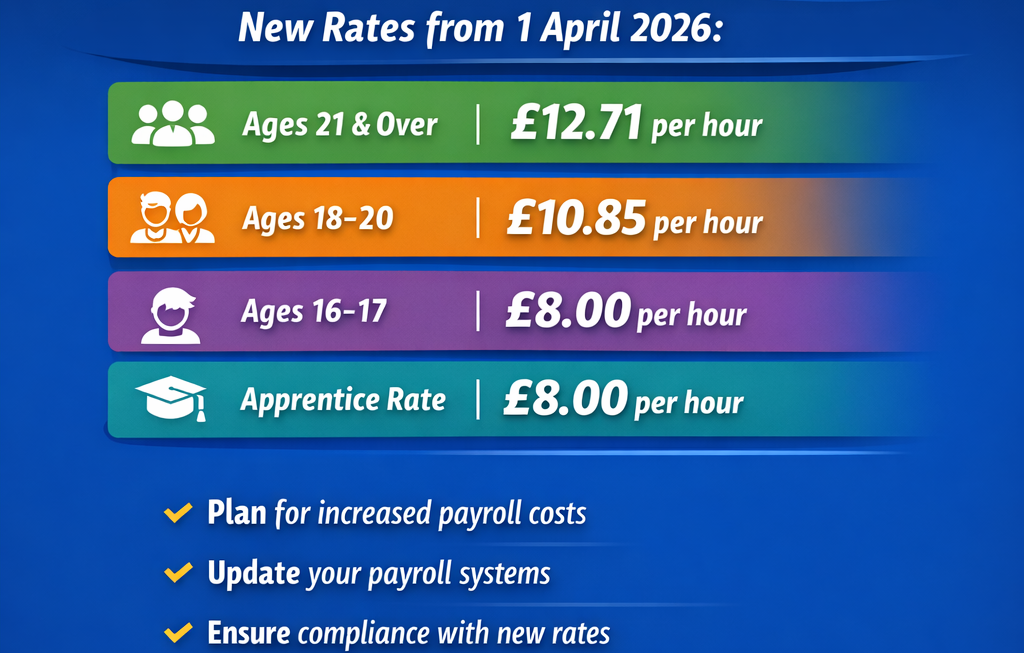
🔹 For workers aged 21 and over (National Living Wage): £12.71 per hour – up from £12.21.
🔹 For workers aged 18–20: £10.85 per hour.
🔹 For workers aged 16–17: £8.00 per hour.
🔹 Apprentice rate: £8.00 per hour.
These increases represent another step in addressing the rising cost of living and inflation, as well as continuing the policy of gradually raising minimum pay levels. For full-time employees, the new rates will result in higher monthly earnings, positively impacting take-home pay.
For employers, the new rates mean updating payroll systems, reviewing employment contracts, and adjusting wage budgets — particularly for small and medium-sized businesses where staffing costs make up a large proportion of overall expenses. Ensuring compliance from 1 April is essential to avoid penalties and potential issues with HMRC.
Summary of changes from 1 April 2026:
• NLW (21+): £12.71 per hour
• NMW (18–20): £10.85 per hour
• NMW (16–17): £8.00 per hour
• Apprentice Rate: £8.00 per hour
If you run a business or employ staff, now is the time to review your payroll processes and make sure you are fully prepared.
If you need support with payroll updates or compliance, professional guidance can help you implement these changes smoothly and accurately.